
Spec-matched UV lamps for every manufacturing process
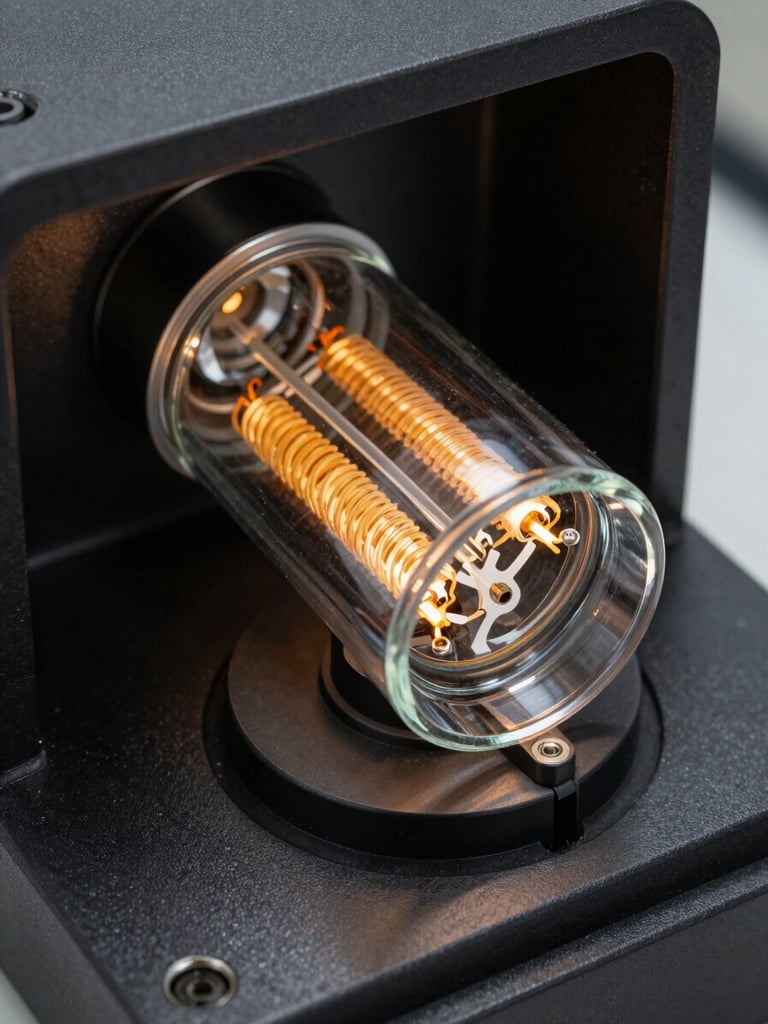
Each UV application — PCB exposure, curing, label printing, electronics production — demands a distinct spectral output and irradiance profile. XLEAD engineers match to your process, not the nearest shelf item.
365 nm precision for dry-film photoresist
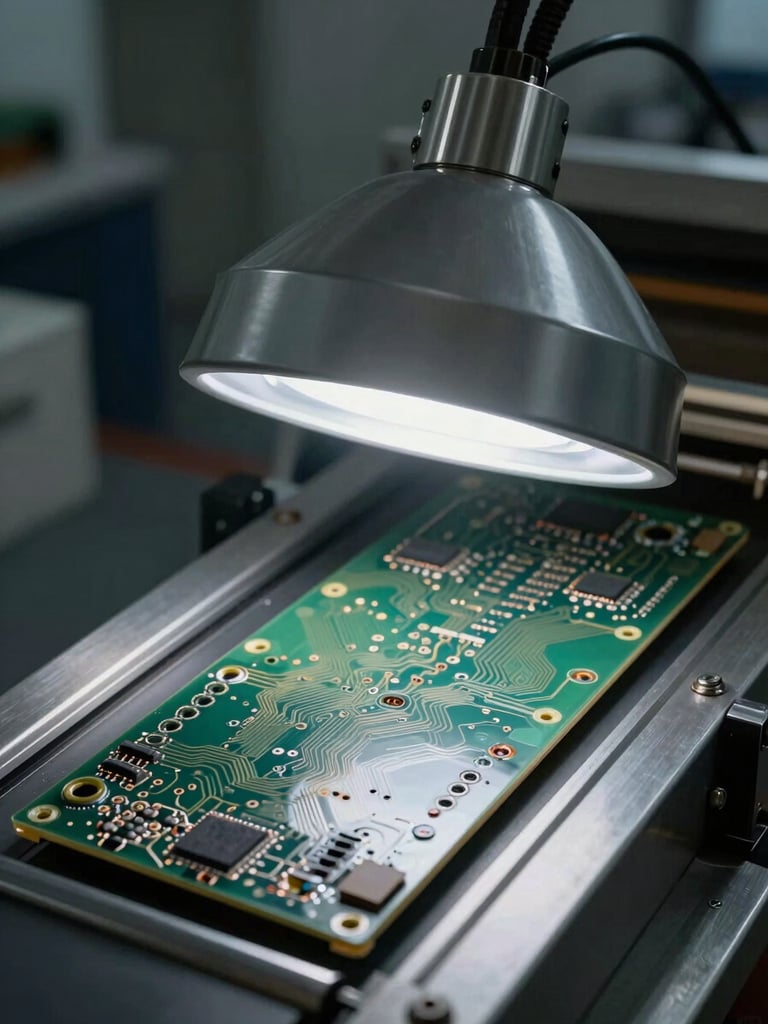
PCB exposure demands tight spectral control at 365 nm. Lamp geometry, arc length, and irradiance uniformity determine resist resolution. XLEAD replacements are matched photometrically to your exposure unit's original specification.
Deviations in arc length or intensity distribution cause underexposure at board edges. We validate replacements against your system's reflector geometry before recommending.
Irradiance density matched to cure chemistry
UV curing requires sustained irradiance at the coating surface — too low and adhesives remain tacky; too high and substrates degrade. Replacement lamps must replicate the original watt-per-centimeter output at your conveyor speed.
XLEAD maps spectral emission curves for conformal coatings, adhesives, and inks across label printing and electronics assembly applications.
What we match before we recommend
Spectral Output
Irradiance Profile
Physical Geometry
Power & Ballast
Peak wavelength and spectral bandwidth matched to your photoresist or cure chemistry. We do not substitute 365 nm for 385 nm.
Electrical input, operating wattage, and ballast compatibility verified to prevent premature failure caused by impedance mismatch.
Watt-per-centimeter output and uniformity across arc length, validated against your reflector geometry and working distance.
Arc length, overall length, base type, and electrode configuration matched exactly to your equipment's lamp housing dimensions.
Have a lamp in hand? We'll match it.
Send us the lamp type, equipment model, or a photo. Our engineers return application-specific replacement specs — not a generic SKU list.